From breathless to back at it: The heart procedure that put one man back on the green – and beyond
Published: Sept. 8, 2026
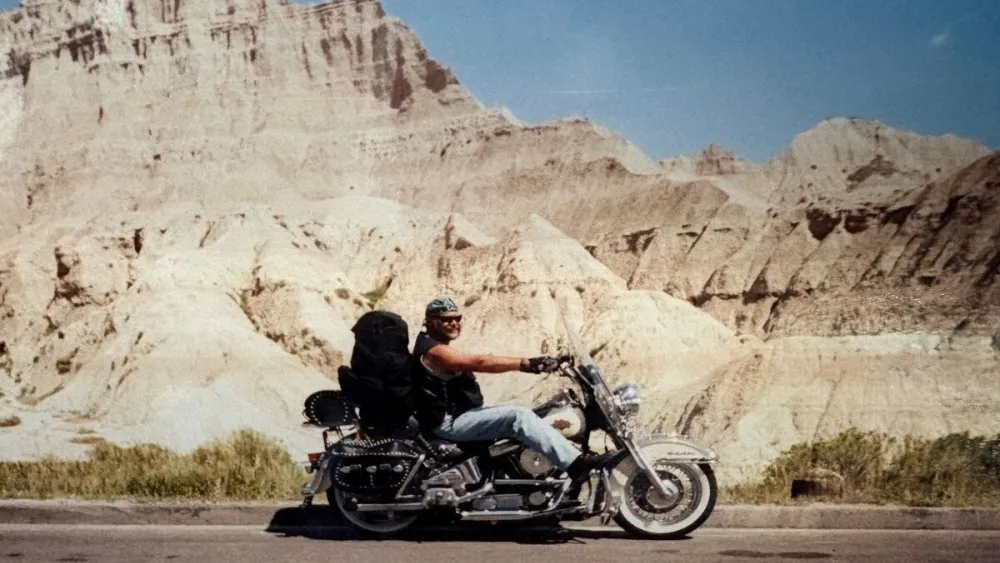
At 71, Mark Deras had built a life defined by motion – long days as a CPA, evenings spent helping raise grandchildren and weekends on the golf course or riding his beloved Harley-Davidson across the country. But over the past few years, that momentum slowed to a crawl.
Breathlessness, fatigue and a failing tricuspid valve had quietly taken over his life, shrinking his world to a repeated cycle of work, sleep and worry.
“I’d go to work, come home, sit in my chair and do nothing,” Deras said. “I couldn’t walk to the mailbox without getting winded. Golf was out of the question. Life just stopped.”
The culprit was severe tricuspid regurgitation – a condition often tied to long‑standing atrial fibrillation. His valve had deteriorated to the point where blood was flowing backward, starving his body of oxygen and overwhelming the right side of his heart.
Traditional open‑heart surgery wasn’t a safe option. Medications weren’t helping. And his symptoms were escalating.
That’s when he was referred to Jai Parekh, MD, a structural heart specialist and interventional cardiologist with Methodist Physicians Clinic. What happened next placed Deras among the first patients in Nebraska and Iowa to receive one of the most groundbreaking advancements in structural heart care: transcatheter tricuspid valve replacement (TTVR) using the EVOQUE system.
A new era in heart care
Approved by the FDA in 2024, EVOQUE TTVR is the first device of its kind in the United States – a minimally invasive way to replace a failing tricuspid valve without opening the chest.
“It’s transformative,” Dr. Parekh said. “For years, patients with severe tricuspid regurgitation had almost no good options. Now we can guide a new valve to the heart through a vein in the leg, fix the leak immediately and help people feel better faster. It’s one of the most exciting advancements in structural heart care.”
Methodist performed its first EVOQUE TTVR in April 2026, placing the health system among the earliest adopters in the region – a reflection of its commitment to bringing cutting‑edge cardiovascular innovation close to home.
“This kind of therapy requires a strong structural heart program with collaboration between interventional cardiologists, cardiothoracic surgeons and electrophysiologists. It requires exceptional imaging, anesthesia support and a phenomenal cath lab team of radiology techs, nurses and sonographers that embrace progress,” Dr. Parekh said. “Not every hospital is ready for that. Methodist is.”
A life-changing procedure
Deras’ procedure took place on April 30. He arrived nervous but hopeful – ready for anything that might give him his life back.
“I was excited,” he said. “I didn’t know how much improvement to expect, but I knew I wasn’t going through surgery unless my quality of life was going to get better.”
Deras woke up that afternoon with no pain, surprised by how smooth and comforting the experience felt.
“I couldn’t believe how attentive everyone was,” he said. “The nurses were incredible. And the doctors checked on me three times a day. I’ve never seen anything like it.”
He was discharged two days later – far earlier than he anticipated. And he felt “really good – great, actually.”
“If my wife hadn’t stopped me, I would’ve gone back to work,” he joked.
Recovery and a new outlook
While the EVOQUE valve begins working immediately, recovery can take time as the body sheds excess fluid and the right side of the heart regains strength.
“For some patients, symptoms improve in days,” Dr. Parekh explained. “For others, like Mark, it may take a few weeks. But the change is profound.”
Within a month, Deras began to feel the shift. The breathlessness eased. His energy returned. And life – “real life,” according to Deras – returned.
“I played 18 holes of golf this week,” he said in late August. “I’m walking two miles with my dog. I still get tired occasionally, but I don’t live with it all day anymore.”
The emotional impact was just as powerful.
“I never admitted it to my wife, but before this procedure, I’d sit alone and cry sometimes,” Deras said. “I was scared. I didn’t know what was going to happen – if this was the way my life would be from here on out. And that’s not me. I’ve always been the one to say, ‘Worrying gets you nowhere.’ And there I was – with a mindset of someone I didn’t recognize.”
His positive, go-get ‘em attitude has also since returned. But the long accounting hours that for years he had committed himself to have not. The self-proclaimed workaholic even booked a cruise for next year – during tax season – something he hasn’t done in 30 years.
“Now, if I want to take a few days off, I’m going to,” he said. “Because as motorcyclists like to say, ‘It’s not about the destination. It’s the journey that matters.’”
A milestone for Methodist, a turning point for patients
For Dr. Parekh, outcomes like Deras’ are the reason innovation matters.
“Seeing someone regain energy, independence and hope after a minimally invasive procedure – that stays with you,” he said. “It’s why we push forward. It’s why we invest in the future. Patients like Mark deserve options that are truly life-changing.”
And Deras’ outcome was nothing short of that.
“They really did give me my life back.”
Media Coverage:
KETV: 'Every day just a little bit better': New heart procedure gives man chance to golf again