
Publications
Thanks to lifesaving care, a new verse begins
Published: Nov. 19, 2026
When Derek Baker’s heart attack began, he felt no pressure, tightness or pain in his chest.
The 57-year-old Omaha man was working in his yard over Memorial Day weekend in 2025 when his less obvious symptoms began: sweating, clammy skin and “just feeling weird.”
It was the start of a widow-maker heart attack – a critical complete blockage of the left anterior descending (LAD) artery that is often fatal.
It was also the beginning of a story highlighting Methodist Health System’s expertise in emergency care and cardiology – and Baker’s drive to not only live, but thrive.
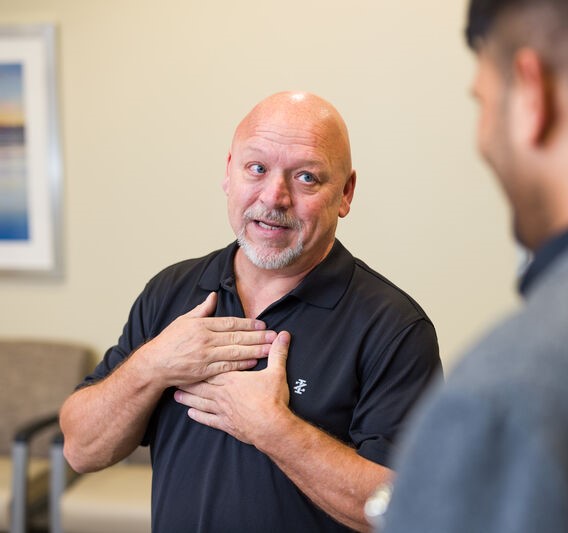
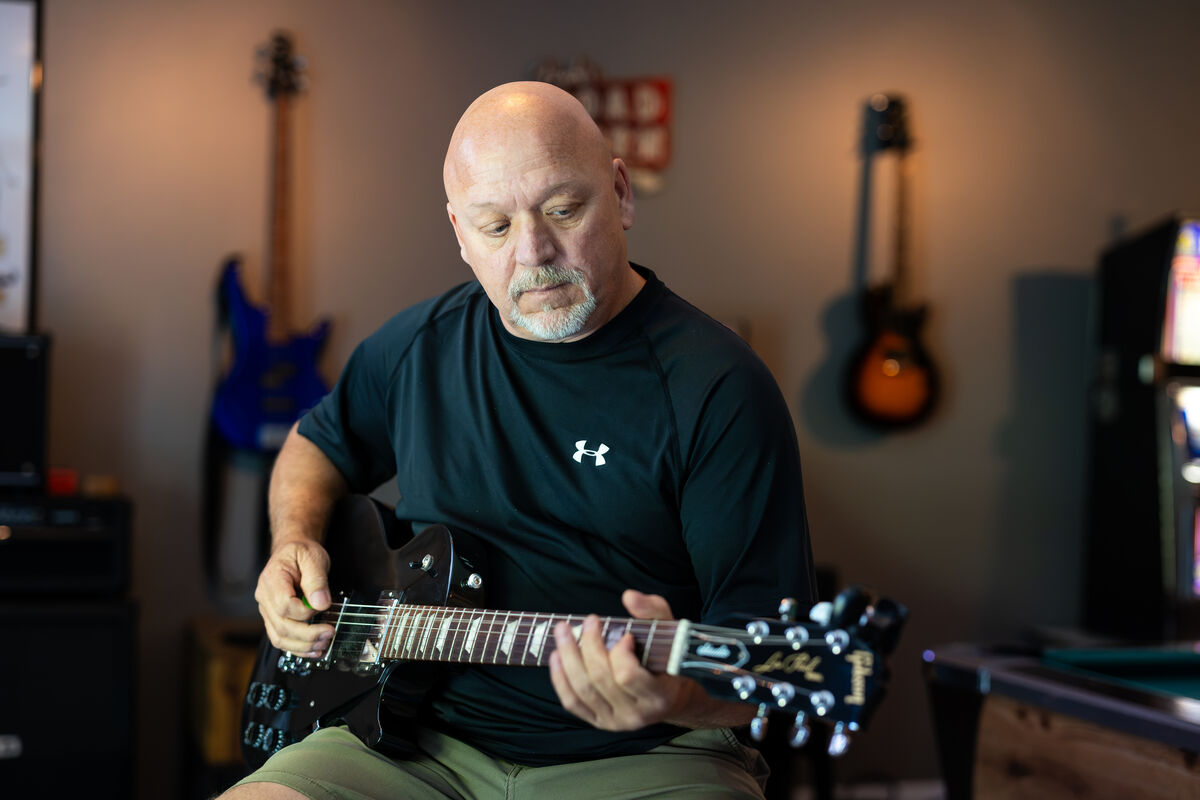
“I’m just so grateful to be here,” said Baker, a skilled guitarist who played in bands in his teens and 20s and still jams with his grandchildren. “The care that I got means everything to me and even more to my family.”
The music stopped
Baker was home alone when his symptoms began.
“I didn’t have any pressure. I didn’t have any tightness,” he said. “They tell you that you go numb in the arm, but there was none of that. There was no indicator that way.”
Baker went inside to rest, and his wife soon returned home between visits with friends. Seeing her husband, she immediately knew something was wrong, and she drove him to the nearest emergency room at Methodist Women’s Hospital.
That quick action proved pivotal for Baker. Minutes after arriving at Women’s Hospital, the music stopped.
As staff performed an electrocardiogram (EKG) that confirmed the heart attack, Baker’s lack of blood flow caused an abnormal heart rhythm, and he went into cardiac arrest.
Baker recalled the emotional moments with his wife before he lost consciousness.
“I was thinking that I have a million things I want to tell her,” he said. “All I could say was sorry, you know? If I didn’t make it. For not being here. And I think within a second it was a light switch. I was just gone.”
Emergency Department staff revived him using a combination of CPR and electric shocks, and they contacted the Methodist Hospital cardiac catheterization (cath) lab. An emergency case was on the way.
Baker’s heart stopped again on the 9-mile ambulance ride, then again as soon as he arrived in the cath lab. Each time he was revived through CPR and shocks.
Immediate action makes all the difference
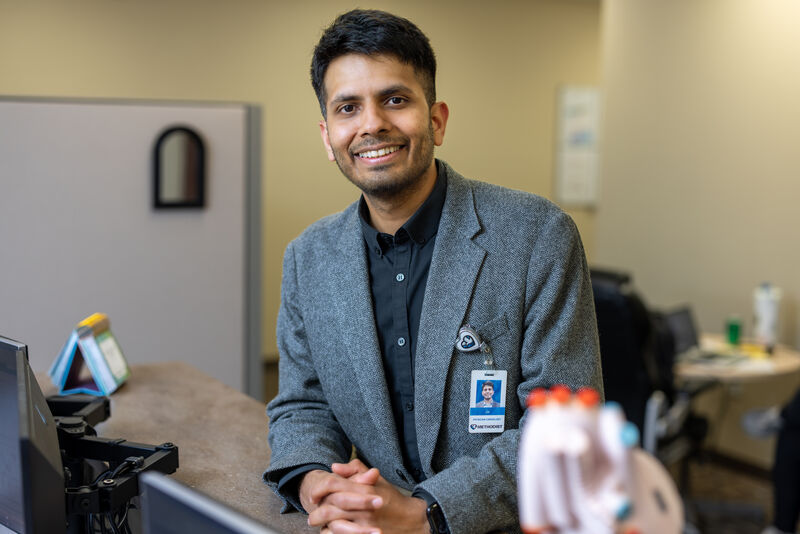
Baker’s situation was dire when he arrived at Methodist Hospital, but he was in the capable hands of interventional and structural cardiologist Jai Parekh, MD, and his team.
They performed an angioplasty – passing a catheter through an artery in Baker’s groin, guiding a small balloon to the blockage in his heart, inflating the balloon to temporarily open the artery and finally inserting a stent to keep it open.
About 45 minutes elapsed from Baker’s arrival at Women’s Hospital to having his artery opened, well below the American Heart Association’s recommendation of 90 minutes or less.
“This is a procedure that we do every single day in the hospital and multiple times a day,” Dr. Parekh said. “If patients come to us in a timely manner, we have the skills, expertise and team available to tackle such complex situations.”
Dr. Parekh emphasized that immediate action – first from Baker’s wife and then from the Methodist emergency care team – made all the difference in his outcome.
“The thing to do is not wait around and to go to the nearest ER, regardless of what that ER looks like,” he said. “If he would have not gone to the nearest ER, he would have never made it to our cath lab.”
A new lease on life
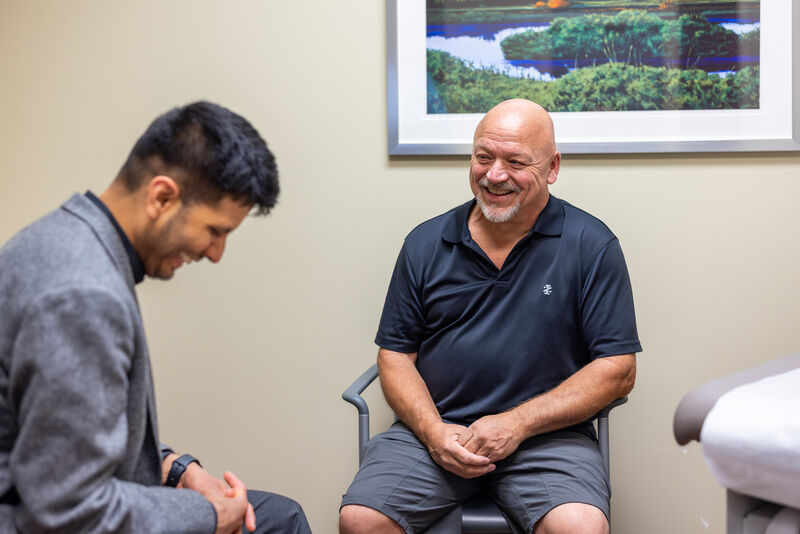
Baker’s recovery has been “phenomenal,” Dr. Parekh said.
Lessons from Methodist Hospital’s cardiopulmonary rehabilitation program led to permanent changes to Baker’s diet and exercise. Today, he’s 35 pounds lighter, his heart function has completely recovered and his outlook is bright, Dr. Parekh said.
“The best part of the job is seeing patients like Derek,” he said. “You have a significant impact on their life and their health by doing a minimally invasive procedure. It's just so gratifying.”
Over a year since his heart attack, Baker has a new lease on life. And he intends to make the most of it.
“I'm just not done,” he said. “There are things I still have to do. There are things that are left unsaid.”
And songs that are left to play.
Photos by Daniel Johnson. Video by Nick Bohan.

Methodist Publications
Highlighting Methodist's medical technology, provider-patient relationships, compassionate care and more.
Check Out the Magazine