More than cosmetic: How vascular care at Methodist helped one man get back to what he loves
Published: Sept. 22, 2026
When Michael Dotson, 74, walked into his annual checkup last year, he almost didn't mention the nagging leg pain that had gradually worsened over time. He figured it was related to his foot arches.
It wasn’t.
The source of the problem was vascular disease, and it had been quietly progressing for more than a year.
“I would go walking with friends, but about six blocks in, I’d have to stop and tell them, ‘Wait a minute,’ because my legs were hurting,” Dotson said. “I’d stand there for a few minutes, and then I could go a little farther. But it kept getting worse.”
His primary care provider, Gregory Hutteger, DO, referred him to Methodist’s vascular team, where he met Katherine Brown, DO. Diagnostic testing soon revealed what had been causing Dotson’s persistent pain – and treating it would require specialized surgery.
Far more than spider veins
According to Dr. Brown, many people associate vascular care with cosmetic concerns such as spider veins and varicose veins. But Dotson’s experience underscores a much broader reality: Vascular disease can quietly steal mobility, independence and quality of life.
His lifestyle‑limiting pain, also known as claudication, stemmed from peripheral vascular disease (PVD) – the narrowing of vessels that prevents adequate blood flow to the muscles. For him, that meant everyday activities were becoming increasingly difficult, especially the one that he loves most – gardening. This type of leg pain or fatigue that limits everyday activities is termed claudication. Although claudication it is likely not a limb threatening condition, it can prevent people from living an active lifestyle.
“Being outside, planting tomatoes and cucumbers – that’s a big pleasure for me,” Dotson said. “I’ve gardened since I was a kid with my dad. It’s just part of who I am.”
PVD can develop from several risk factors, including smoking. Dotson quit decades ago, but the damage to arteries can linger. While past smoking doesn’t define a patient’s future, Dr. Brown said, it can contribute to vascular changes that deserve attention – especially when symptoms appear.
“Pain or discomfort that limits walking or daily activities should always be investigated,” she said. “A simple exam and ultrasound can help differentiate vascular issues from more common causes of leg pain.”
Two legs, two different solutions
Dotson’s right leg was treated with a minimally invasive stent placement – a procedure that he recalls being “quite painless” and that allowed him to go home the same day.
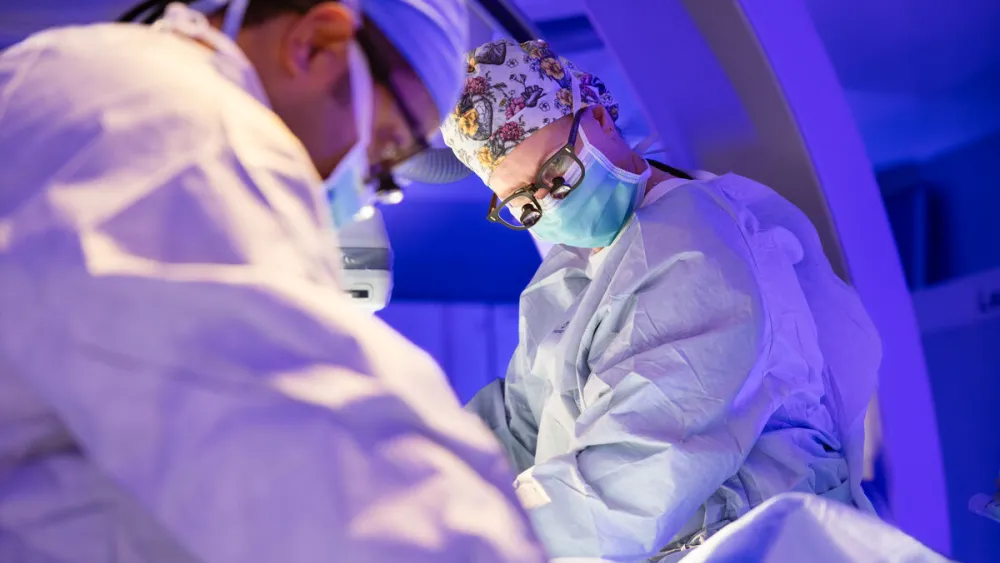
His left leg required a more complex approach – a bypass surgery to reroute blood flow around a severe blockage behind his knee.
“Stents or balloons can be used to open diseased arteries,” Dr. Brown said, “But if the narrowing is too severe or the blockages can’t be opened, surgery may be necessary. In this case, that meant using a vein to be sewn into the arteries to bypass the blockage.”
The treatment plan was specifically tailored to Dotson’s anatomy – a hallmark of modern vascular care.
The risk of waiting
Dotson considered delaying surgery until after gardening season. But Dr. Brown helped him understand what waiting could mean.
“She said my quality of life just wouldn’t be as great,” Dotson said. “That I likely wouldn’t be able to walk as well or as often as I would like. That was a good enough explanation for me.”
While most patients with PVD aren’t at immediate risk of limb loss, the condition can worsen over time. And PVD isn’t just a leg issue. It can signal broader cardiovascular risks.
“Many patients with PVD also may have cardiac disease and may be at risk for heart attack or stroke,” Dr. Brown said.
A return to gardening – and living
Just two months after surgery, Dotson is nearly pain‑free. His left leg remains slightly swollen as he continues to heal, but he’s back to walking at the gym, tending his garden and preparing to rejoin his friends for long strolls – something he once feared he might lose forever.
“It means a lot to me because my future looks better again. And I want to be moving until I’m 400 years old,” he joked. “Being able to do things without being in pain is something you take for granted. But it’s really great when you get to experience it again.”
He’s thriving, he added – just like his tomatoes and cucumbers.
“Of course I had to take some to Dr. Brown,” he said.
And for Dr. Brown, that’s the heart of her work.
“Helping patients improve their health and get back to the things they enjoy – that’s why I love my job,” she said.
Her patient’s story is a reminder that vascular disease is treatable – and that Methodist’s vascular team is equipped with the expertise, compassion and innovation to help patients reclaim their lives.
Dotson – so moved by his outcome and the care he received – wrote a letter to the Methodist Health System leadership team shortly after his procedure. He described the staff as “superheroes,” praising their kindness, professionalism and compassion.
He wrote: “I don’t believe that I could have found a better team of professionals.”