
Women's Health
'A remarkable catch': Volunteer ultrasound leads to a life-changing discovery
Published: June 1, 2026
When Kelsey Kelley, APRN, clicked on an email one slow afternoon last fall, she wasn’t looking for anything life‑changing.
Expecting her first child at the time, Kelley – who happens to be a hospital medicine nurse practitioner at Methodist Hospital – stumbled upon a call to action.
Nebraska Methodist College’s Volunteer Sonography Program needed pregnant volunteers to help sonography students practice their skills.
“I’ve always been big on helping learners,” Kelley said. “Hands‑on opportunities are hard to come by, and I know how important they are. This felt like something small I could do – donate an hour, help students learn and see the baby again.”
A not-so-routine scan
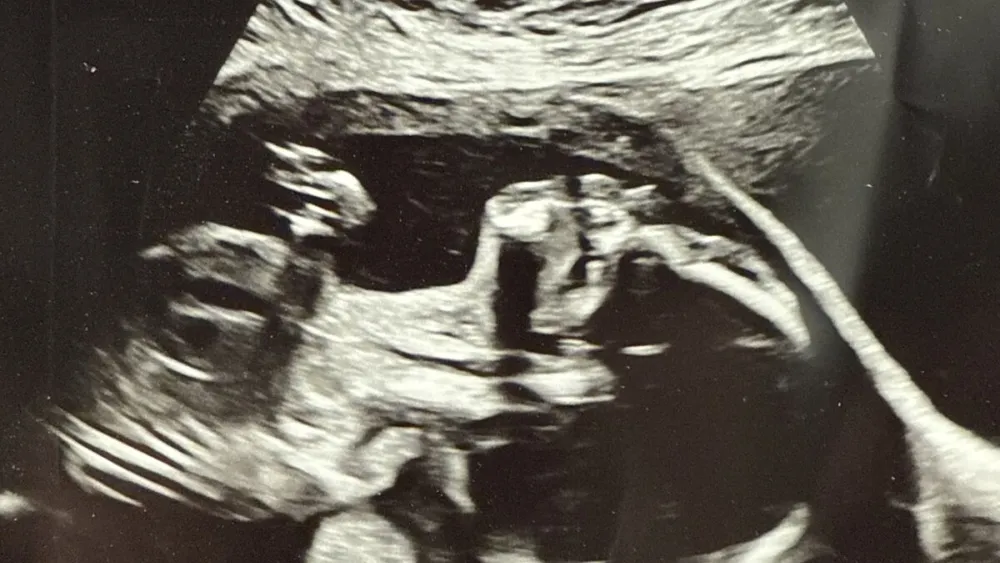
Kelley was 30 weeks pregnant when she arrived for the scan. The session was long, the baby was in an awkward position, and instructor Mandi Tanner, RDMS, RVT, stepped in several times to guide students through the images they needed. Nothing about the experience felt unusual – until the very end.
“Mandi came over and said she wanted to reimage a few things,” Kelley recalled. “I assumed it was just for teaching.”
Careful not to alarm her, Tanner explained that she had noticed a persistent abnormality throughout the scan and needed to document it in an incident report. She then encouraged Kelley to reach out to her provider for next steps.
Kelley snapped a photo of the report and sent it to her OB/GYN team at Methodist Physicians Clinic Women’s Center. Within hours, they called her back.
What Tanner had noticed – a dilated section of bowel – wasn’t something she could diagnose. But it was something she couldn’t ignore.
“As a sonographer, even in an educational setting, the patient is always at the center,” Tanner said. “Volunteer or not, that’s still a patient. If we see something abnormal, we document it and advocate for them. That’s what we teach our students – and they saw that in real time.”
Rapid response
Within a week, Kelley was seen by Methodist maternal‑fetal medicine specialist Matthew Brady, MD.
“One of the first things he said to me was, ‘I’m glad you had that volunteer scan,’” Kelley said. “That’s when it hit me that this might be something serious.”
Dr. Brady remembers the moment clearly. Follow-up imaging confirmed what Tanner had suspected – a concerning issue with the baby’s bowel.
“These cases often develop later in pregnancy – well after the 20‑week anatomy scan,” he said. “Just a remarkable catch. The fact that this was identified tells me the sonography program is teaching students to look for the right things. It speaks to the quality of instruction.”
The finding set off a coordinated chain of care.
Kelley was connected with a pediatric surgeon at Children’s Nebraska and was admitted to Methodist Women’s Hospital for close monitoring.
Before long – at just 33 weeks – Kelley’s water broke.
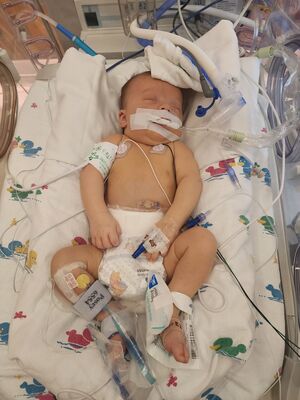
She delivered her son, Bennett, on November 23. He spent 12 hours in the Methodist Women’s Hospital NICU before being transferred to Children’s for surgical care.
Within 24 hours, Bennett was diagnosed with type 3B jejunal atresia – a rare and serious condition in which part of the small intestine fails to develop. In Bennett’s case, only centimeters of healthy bowel were present above a complete blockage.
“If we hadn’t known about the obstruction, they would have tried to feed him after birth,” Kelley said. “It could have perforated his bowel. Knowing ahead of time led them to decompress his stomach immediately, which changed everything.”
Dr. Brady agrees.
“Early detection allowed us to get the right specialists involved and prepare for timely intervention,” he said.
Bennett required three surgeries and a 70-day NICU stay. The experience was long and emotional, Kelley said, but she never felt alone.
“As stressful as it was, I felt like everyone had it covered,” she said. “From the volunteer ultrasound to my OB/GYN and high-risk teams, everyone was on it.”
Full-circle moment
Today, Bennett is thriving. He’s gaining weight, hitting milestones and “just a happy, healthy little boy,” Kelley said.
She still thinks about Tanner – the instructor who trusted her instincts and took a second look.
“She didn’t have to take the time,” Kelley said. “It wasn’t even something they were studying that week. But she noticed something and acted on it. I’m so thankful for her.”
For Tanner, the experience was a full‑circle moment – for her, her students and the program.
“She was there on the right day, at the right time,” Tanner said. “Our students got to see what patient‑centered care really looks like. How they should document, speak up and advocate. That’s what we teach – and this showed why it matters.”
Dr. Brady sees it the same way.
“One thing that makes Methodist unique is how accessible and collaborative everyone throughout the health system is,” he said. “We act as a team. We enjoy working together. And when something concerning comes up, we move quickly. That’s not always the case everywhere.”
Kelley, who likely wouldn’t have had another ultrasound before birth, now encourages other expectant moms to volunteer.
“You’re helping students learn,” she said. “And while I hope everyone has a normal scan, you never know what could pop up.”
And for her family, what popped up made all the difference in the course of their story.

The Meaning of Care Magazine
Highlighting Methodist's medical technology, provider-patient relationships, compassionate care and more.
Check Out the Magazine