
Cancer Care
Methodist’s head and neck cancer team offers world-class care close to home
Published: April 13, 2026
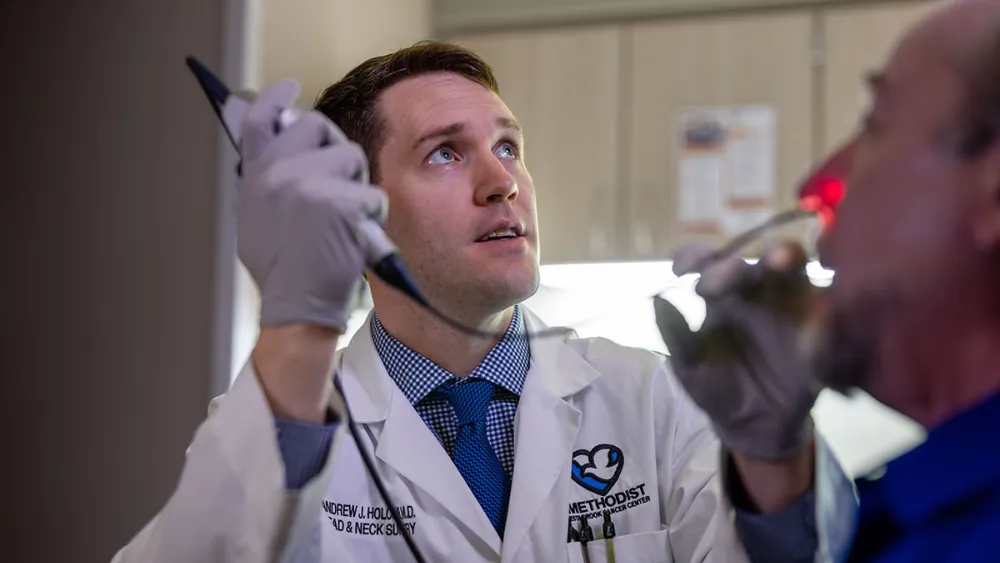
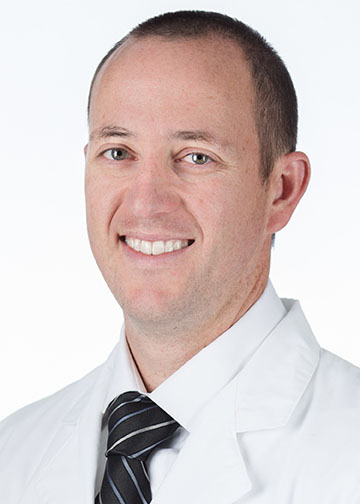
A Q&A with Andrew Coughlin, MD, a head and neck surgical oncologist with Methodist Estabrook Cancer Center
Head and neck cancers may not have the notoriety of conditions like breast, lung or prostate cancer, but they are becoming more common. They make up nearly 4% of cancer cases in the U.S., according to the National Cancer Institute (NCI). The NCI estimates that over 72,000 people were diagnosed with head and neck cancers in 2025, and over 16,000 people died.
State-of-the-art care is available in Nebraska and western Iowa, however, thanks to Methodist’s head and neck surgical oncology team.
What makes Methodist’s team so unique and effective?
Our mission revolves around multidisciplinary cancer care, and we also provide services through partnerships with other specialties throughout the community. This collaborative approach puts patients first and provides the best possible standard of care.
We’re leaders in the management of thyroid and parathyroid diseases; cancers of the mouth, sinuses and throat, including those caused by human papillomavirus (HPV); head and neck skin cancers, including melanoma; saliva gland tumors; and a variety of other benign and cancerous head and neck conditions.
We’re well-equipped to provide the most efficient, effective and comprehensive care in the region, and we’re one of the highest volume head and neck surgical practices in the country.
What does Methodist’s multidisciplinary approach entail?
What truly makes us unique is our collegiality and systematic approach to putting patients and their families first throughout a cancer journey. Through shared decision-making and multidisciplinary conferences, we create evidence-based treatment plans and offer multi-institutional clinical trials to provide the care that our patients expect and deserve.
Our comprehensive approach includes necessary support services, such as dieticians, speech and language pathology, physical therapy, occupational therapy, prosthodontics, lymphedema therapy, and care management.
How do technology and innovation fit into Methodist’s care?
We offer minimally invasive approaches in all aspects of care, including robotics, endoscopy, de-escalation trials, microvascular reconstruction, intraoperative image guidance, neuromonitoring and sentinel lymph node biopsy for a variety of pathologies. We’re dedicated to adopting the most effective technologies that improve patient outcomes, and we monitor novel devices to decide if they truly add value to our care versus only adding costs for patients.
We also conduct clinical research locally and nationally in a multi-institutional fashion. We offer numerous cutting-edge clinical trials and have collaborated on a multitude of projects through numerous local, regional and national partnerships and professional societies. This has not only made an impact on the advancement of medicine but has also allowed us to support the growth and promotion of numerous medical students. Supporting lifelong learning through research is paramount to our mission.
Why are Methodist’s outreach efforts so important?
Patients expect world-class care at Methodist Estabrook Cancer Center, but we know how important accessibility and convenience can be. By expanding to Methodist Jennie Edmundson Hospital and Methodist Fremont Health, we’ve brought our services closer to patients in western Iowa, Fremont and beyond.
At these outreach locations, patients see the same Methodist providers and receive the same high-quality care, including radiation and medical oncology services, imaging services, and surveillance visits – all closer to home.
It’s one more way we show our commitment to providing patients with the best care in the region.
Andrew Coughlin, MD, is a head and neck surgical oncologist who cares for patients at Methodist Estabrook Cancer Center and Methodist Jennie Edmundson Hospital. He specializes in robotic surgery for oropharyngeal cancers; complex head and neck microvascular reconstruction; complex skin cancer therapy and reconstruction; salivary gland tumors with sialendoscopy; and endoscopic skull-based surgeries. To schedule an appointment with Dr. Coughlin or another Methodist provider, visit www.bestcare.org/headandneck.
The Meaning of Care Magazine
Highlighting Methodist's medical technology, provider-patient relationships, compassionate care and more.
Check Out the Magazine